Kefalonia weather through the year
All the figures on this page are averages for Argostoli from 2015 to 2024. Daytime highs range from about 14 °C in January to 30 °C in July and August, and summer nights stay warm, around 23–24 °C. July and August are almost rainless, with about 10 mm a month, while most of the year's rain falls from November to February, when November alone averages about 190 mm.
The sea lags behind the air. It is coolest from February to April, around 16–17 °C, warms to 24 °C in June and peaks at 26–27 °C in August and September. Kefalonia is a mountainous island, so expect cooler, cloudier conditions on Mount Ainos, which reaches 1,628 m and often sees snow in winter, and remember that the west coast catches more wind and swell than the sheltered south and east.
Spring: April and May
April brings highs of about 19 °C, green hillsides and wildflowers, but the sea is still around 17 °C, too cold for most people to swim for long. It is a good month for walking and sightseeing, and Greek Orthodox Easter, which often falls in April, is a lively time to be on the island, though many hotels and tavernas in the resorts are only just opening.
Kefalonia in May is warmer, with highs around 22 °C and only about 35 mm of rain. The sea reaches about 19 °C, bracing rather than warm. By late May most businesses are open, the beaches are quiet and prices are lower than in summer, which makes it one of the best months for hiking, walking and touring the island by car.
Summer: June, July and August
Kefalonia in June is, for many visitors, the sweet spot: highs of about 27 °C, very little rain, long days and a sea that has warmed to about 24 °C. British schools are still in session for most of the month, so beaches such as Myrtos and Antisamos are busy but not packed.
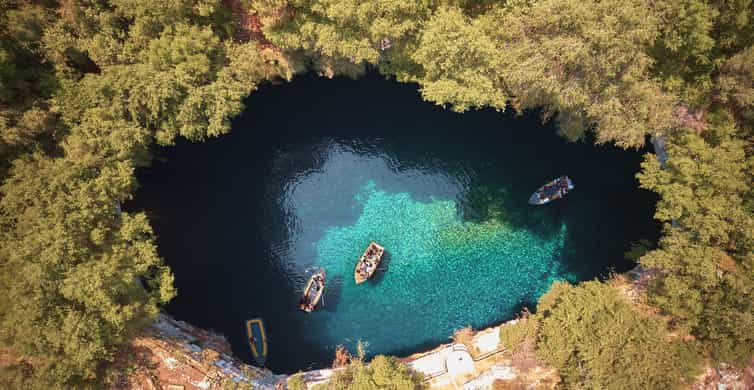
July and August are hot and dry, with highs around 30 °C and the sea at 26–27 °C. Kefalonia in August is the peak of the year. The busiest days fall around 15 August, when the Greek holiday of the Dormition of the Virgin coincides with Italy's Ferragosto, and the island fills with Greek and Italian holidaymakers. Book accommodation, hire cars and popular boat trips well ahead, go to the famous beaches early in the morning and expect queues at Melissani Cave.
Summer heat also brings a high wildfire risk. Never light fires or barbecues outdoors, do not drop cigarettes and follow any local warnings; in a heatwave, plan beach time for the morning and late afternoon.
Autumn: September and October
Kefalonia in September is the other favourite: highs of about 27 °C, the warmest sea of the year at around 26 °C and far fewer people once the European school holidays end. The first autumn rain arrives, about 75 mm on average, often as short, heavy storms rather than grey days, so a lost afternoon is more likely than a lost week.
Kefalonia in October is mild, with highs around 23 °C, and the sea is still about 23 °C, almost as warm as in June. Rain rises to about 95 mm and the weather is more changeable, but sunny days are common. The season winds down through the month: boat trips run less often, and many hotels and tavernas in the resorts close from late October.
Winter: November to March, and what closes
Winter is mild but wet. November is the wettest month, December and January are not far behind, and highs stay around 14–16 °C from December to March. Sunny spells are common between the storms, and the summit of Mount Ainos often has snow.
Outside the season Kefalonia is a different island. Most resort hotels, beach bars and tavernas in places such as Skala, Lassi and Fiskardo close roughly from the end of October until April or May, and most boat trips and boat hire stop. The caves of Melissani and Drogarati work on reduced or limited timetables outside the summer months, so check before you go. Argostoli, Lixouri and Sami stay alive all year, and most direct flights from the UK and the rest of Europe are seasonal, so in winter you usually connect through Athens; see Kefalonia airport and ferries to Kefalonia.
Wind and storms
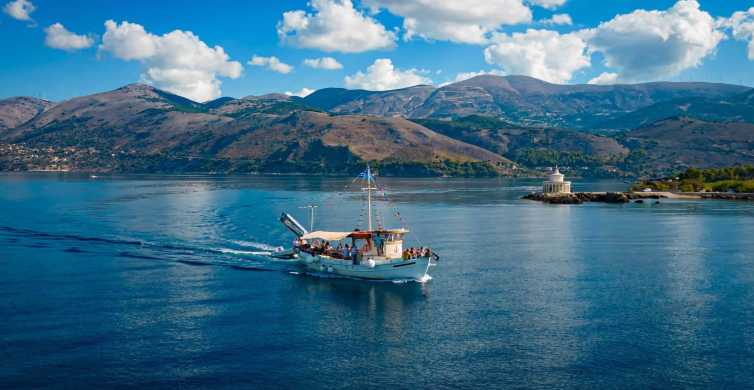
In summer the prevailing wind is the maistros, a north-westerly breeze that usually rises around midday and drops in the evening. It keeps the heat bearable but brings waves to the exposed west coast, so on windy afternoons the south and east coast beaches are often calmer. Boat trips and boat hire may be cancelled when the sea is rough.
Big storms are rare but do happen. In September 2020 the Mediterranean cyclone Ianos, a so-called medicane, hit the Ionian Islands: on Kefalonia it brought hurricane-force gusts, flooding and landslides, sank boats in Agia Efimia and cut off Assos for a time, and a state of emergency was declared. Storms like this are exceptional, but in September and October it is worth following the forecast and any civil protection warnings.
So when is the best time to visit Kefalonia?
For beaches and swimming, go between mid-June and late September; for the best balance of warm sea, open tavernas and space, choose June or September. For walking, sightseeing and lower prices, May and October are ideal. Avoid the first three weeks of August if you dislike crowds, and if you travel in winter, base yourself in Argostoli rather than a resort. Once you have your dates, see where to stay in Kefalonia and the best beaches.