What Myrtos Beach is like
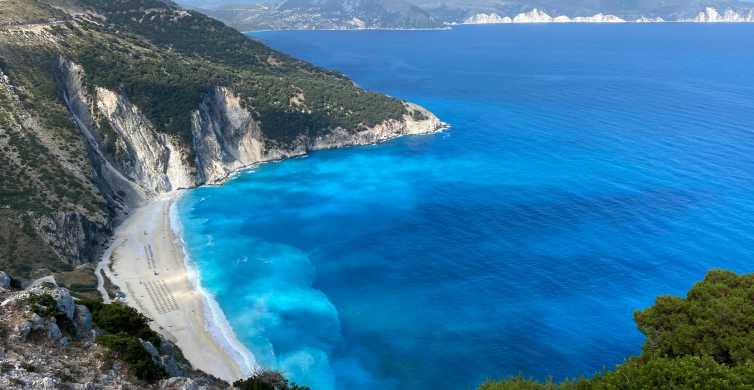
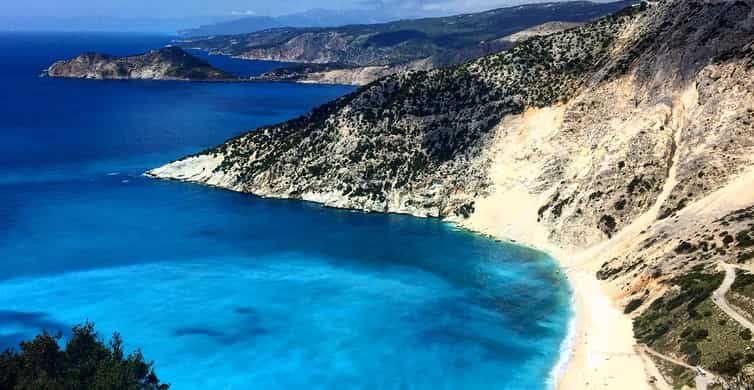
Myrtos lies at the foot of a bowl of steep, pale limestone cliffs below Divarata, in the Pylaros area of the north-west. The beach is long and wide, made of small white pebbles, and the water turns an intense turquoise-blue a few metres out, which is why it appears on almost every poster of the island.
There is no village and no natural shade, just the beach, a car park and seasonal facilities. It is open to the west, so it catches the afternoon sun and some of the island's best sunsets, but also the wind and swell. In July and August it is busy from late morning; at either end of the day, or in June and September, it is far calmer.
The Myrtos viewpoint
The classic photograph is taken from above. The main road from Argostoli to Assos and Fiskardo climbs along the cliffs north of Divarata, and lay-bys there look straight down on the bay; there are also places to pull in on the bends of the road down to the beach. Many coach tours stop only at the viewpoint.
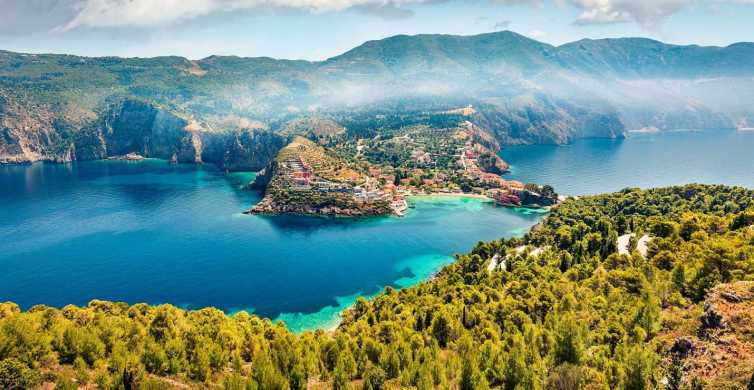
Stop only where there is a proper lay-by, well off the carriageway: coaches use the same road, and stopping on a bend is dangerous. The water looks its brightest on a sunny day with the sun high, from late morning into the afternoon. A few kilometres north, the Assos viewpoint is the other classic stop on the same road.
The road down and parking
The beach road leaves the main road at Divarata and drops 2–3 km in a series of tight hairpin bends to sea level. It is paved and fine for a normal hire car, but narrow in places: take it slowly, use a low gear on the way down and expect to pull over for coaches and other cars. Walking back up in summer heat is hard going.
At the bottom there is a large free car park behind the beach. In July and August it is usually full by late morning, and cars then queue or park along the road. Arrive before about 10:00, or come after 16:00 when the first wave leaves. If you are not confident on mountain roads, see car hire in Kefalonia for tips on driving the island.
The pebbles, the waves and safety
The beach is made of smooth white pebbles, with some patches of coarser sand. The seabed shelves steeply, so you are out of your depth within a few metres, which makes it less suitable for small children or weak swimmers. Water shoes help both on the beach and at the water's edge.
Because the bay faces west, the summer north-westerly can bring strong waves and currents in the afternoon, and after a windy day the swell can last into the next morning. A lifeguard is on duty in the high season on the organised section; respect the flags, and on a rough day choose a sheltered beach on the east coast such as Antisamos instead.
The cliffs are unstable. In June 2014, after the strong earthquakes of that winter, the beach road was closed for about three weeks so that loose rock could be removed and rockfall barriers installed. Rockfalls are still frequent: in July 2026 part of the slope above the beach gave way, sending rocks and soil onto the sand, though nobody was hurt. Warning signs are in place; set up well away from the foot of the cliffs and never shelter under overhangs.
Facilities on the beach
In summer part of the beach is organised, with sunbeds and umbrellas to rent, a canteen selling drinks and snacks, toilets and showers. The rest is free, but it has no shade at all, so bring an umbrella, plenty of water and sun protection. The facilities are seasonal, typically open from early summer to the end of the season, and outside that period you should bring everything you need.
There are no shops or tavernas at the beach itself beyond the canteen, so for a proper meal drive up to the villages on the main road or on to Agia Efimia or Assos.
Getting to Myrtos: car, bus and tours
By car, Myrtos is about 29 km from Argostoli, roughly 40 to 45 minutes on the main road north, and about 50 minutes to an hour from the airport. From Agia Efimia it is about 9 km, around 15 to 20 minutes, and from Fiskardo roughly half an hour to the south.
Without a car it is harder. KTEL buses from Argostoli run north in summer and stop at Divarata on the main road, from where it is a steep walk of 2–3 km down to the beach; services are few and change each season, so check the current KTEL Kefalonias timetable before relying on a bus back. A taxi, a north-coast tour or a boat trip along the coast are the alternatives.
Hotels near Myrtos Beach
There are no hotels on the beach itself. The closest places to stay are the small villages of Pylaros around Divarata, with apartments and villas in the hills, and the harbour village of Agia Efimia, the best base for Myrtos with tavernas, a beach and boat hire. Assos is the quieter, prettier alternative, and Sami puts both Myrtos and the caves within easy reach. Compare the areas in where to stay in Kefalonia.
Frequently asked questions
How do you get down to Myrtos Beach?
By a paved road of 2–3 km with tight hairpin bends that leaves the main Argostoli–Fiskardo road at Divarata. There is a large free car park at the bottom.
Is there a bus from Argostoli to Myrtos Beach?
In summer, KTEL buses from Argostoli to the north stop at Divarata on the main road, a steep 2–3 km walk above the beach. Services are infrequent, so check the current timetable first.
Is Myrtos Beach good for swimming?
Yes on calm days, but the water gets deep within a few metres and the west-facing bay can have strong waves in the afternoon. A lifeguard covers the organised section in high season.
Is parking at Myrtos Beach free?
Yes, the car park at beach level is free. In July and August it is usually full by late morning, so arrive early or in the late afternoon.
How far is Myrtos Beach from Agia Efimia?
About 9 km, roughly 15 to 20 minutes by car, which makes Agia Efimia the most convenient village base for Myrtos.