Pebbles or sand: how Kefalonia beaches differ
The beaches on the postcards are mostly white pebble: Myrtos, Antisamos, Petani and the coves around Fiskardo. The pebbles keep the water extraordinarily clear, but they are hard on bare feet and the seabed often drops away quickly, so bring water shoes and keep an eye on small children.
For sand, look to the south-west and south-east: the Lassi beaches next to Argostoli, the long beach at Skala, Mounda near Katelios, Lourdas and the red sand of Xi on Paliki. Kefalonia is bigger than it looks, and from Argostoli the famous west-coast and east-coast beaches are each about 40 to 45 minutes away on winding roads, so choose a base with the beaches you will use most in mind; where to stay in Kefalonia helps.
The north-west and north: Myrtos and the Fiskardo coves
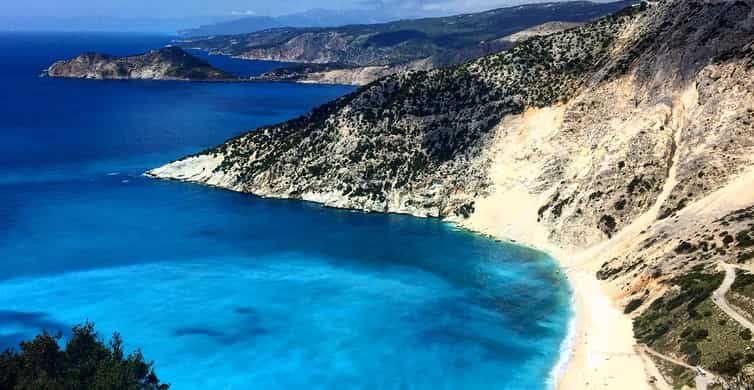
Myrtos is the island's best-known beach: a long arc of white pebbles and deep turquoise water below high cliffs, about 29 km north of Argostoli. The last 2–3 km from Divarata are a series of hairpin bends down to a free car park at beach level, which fills by late morning in July and August. Part of the beach has sunbeds, a canteen and a lifeguard in summer; the rest is free, and there is no natural shade. Rockfalls from the cliffs are frequent, so stay away from their base.
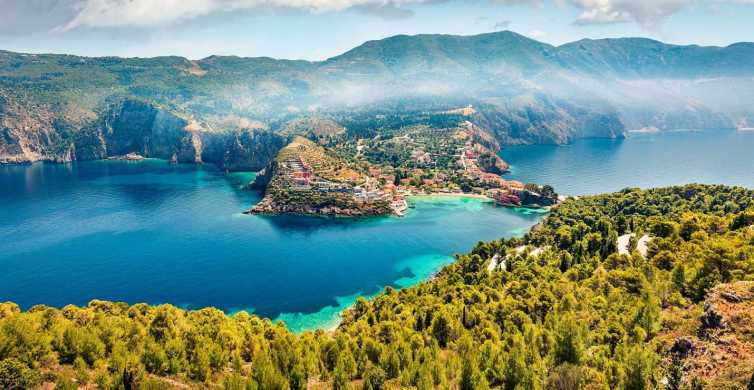
Further north, the coves near Fiskardo face Ithaca across a sheltered strait. Foki is a narrow inlet with olive trees that give real shade and a taverna above, and Emblisi is a small bay of pebbles and flat rocks with very clear water and a refreshment van in season. Both are small and fill up quickly in August, so arrive early. Assos has its own small pebble bay in front of the village.
The east coast around Sami: Antisamos and Agia Efimia
Over the hill from Sami, Antisamos is a bay of white pebbles framed by green slopes, where scenes of the film Captain Corelli's Mandolin were shot. The road from Sami is around 4–5 km, climbing over the ridge and dropping down in tight bends. It has beach bars with sunbeds and water sports, and it is usually calmer than the west coast when the summer north-westerly blows.
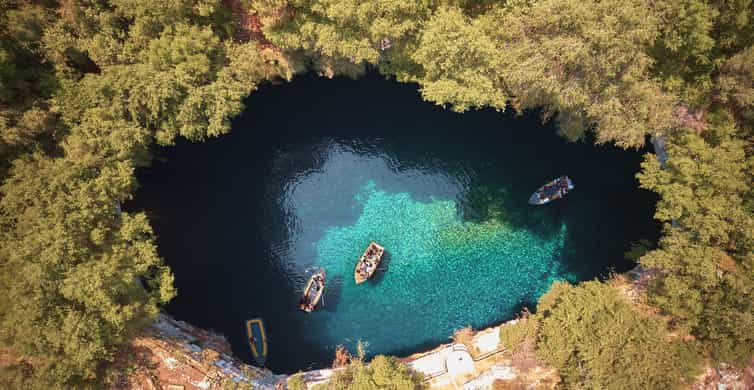
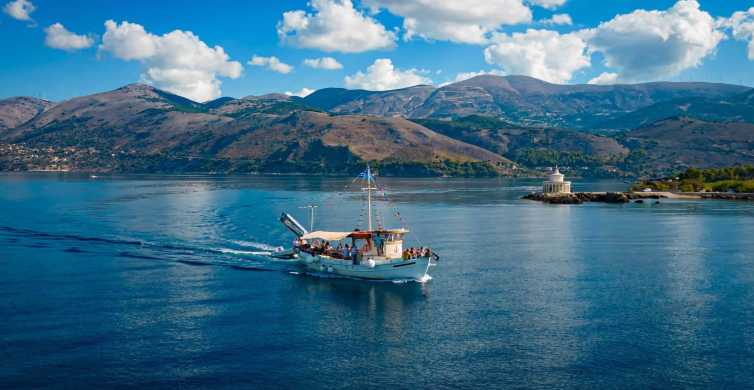
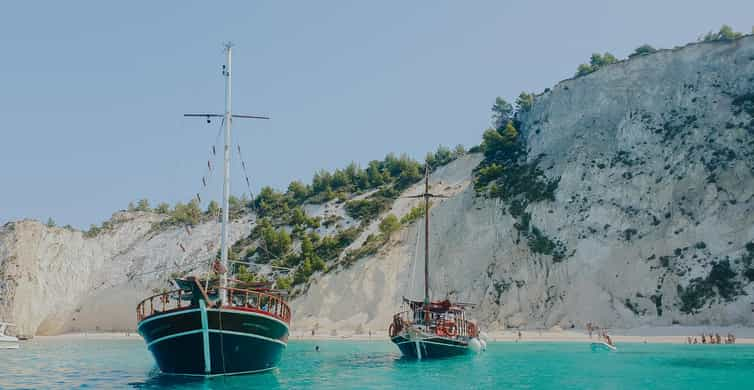
Sami itself has a long, simple town beach running north towards Karavomylos, handy for a swim after visiting Melissani Cave, and Agia Efimia has small pebble coves either side of its harbour. Many of the best coves along this coast are easiest to reach by sea; see boat trips and boat hire.
Argostoli and the south-west: Lassi, Lourdas and the airport coast
The beaches most people mean by Argostoli beach are in Lassi, 2–3 km south of town: Makris Gialos and Platis Gialos, two sandy bays separated by a few rocks, with sunbeds, bars and water sports. They are the easiest beaches on the island without a car, and also the busiest in high season.
South of the airport, the villages of Agios Thomas and Karavados have small sandy coves with clear water, and Spartia has a sandy beach below clay cliffs, reached by a road and then a path. Further east, Lourdas has a long, mostly sandy beach below the slopes of Mount Ainos, with tavernas and sunbeds, about 20–25 minutes' drive from Argostoli.
The south-east: Skala, Mounda and the turtle beaches
Skala has a long organised beach of sand and fine shingle within walking distance of the village, with sunbeds, water sports and a gently shelving shore that suits families. Between Skala and Katelios, Mounda is a broad, quieter sandy bay with shallow water.
Mounda is also the most important loggerhead turtle nesting beach on Kefalonia, monitored by the conservation group Wildlife Sense. Females lay from late May to mid-August and hatchlings emerge from July to October. Leave marked nests alone, walk near the water's edge rather than across the back of the beach, flatten sandcastles and fill holes before you leave, and do not stay on the beach at night. More in the turtles of Kefalonia.
Paliki: Xi and Petani
On the Paliki peninsula, reached by the ferry from Argostoli to Lixouri or a long drive round the gulf, Xi is a long beach of soft, rust-red sand below pale clay cliffs, with very shallow water, sunbeds and tavernas. It is one of the best beaches on the island for young children.
On the west coast of Paliki, Petani is a curve of white pebbles below steep hills, at the bottom of a winding road with hairpin bends, with two tavernas and some of the best sunsets on Kefalonia. The sea deepens quickly and the bay is open to the west. Both are covered in more detail in Petani and Xi beaches.
Wind, waves and choosing a beach for the day
In summer the prevailing wind in the Ionian is the north-westerly maistros, which is usually light in the morning, builds around midday and drops towards evening. On a breezy afternoon the west-facing beaches, Myrtos and Petani above all, can have strong waves and currents, while Antisamos, Skala and the Fiskardo coves stay calmer. Southerly winds are less frequent but turn the tables, bringing swell to the south coast. Respect red flags where there are lifeguards, and remember that most beaches have none.
Most organised beaches charge for sunbeds and umbrellas, often in cash, while the free sections fill early in July and August, especially around 15 August, when Greek and Italian holidays coincide. From late September the beach bars start to close, but the sea stays warm well into October; see the weather and best time to visit. Summers are dry and wildfire risk is high, so never light a fire on a beach or drop a cigarette.
Frequently asked questions
What is the most famous beach in Kefalonia?
Myrtos, a long arc of white pebbles and turquoise water below high cliffs on the north-west coast, about 29 km from Argostoli. It is reached by a steep road of hairpin bends from Divarata.
Are Kefalonia beaches sandy or pebbly?
Both. The best-known beaches, such as Myrtos, Antisamos and Petani, are white pebble, while Lassi, Skala, Mounda, Lourdas and Xi are sandy or mostly sandy.
What is the best beach in Kefalonia for families?
Xi on the Paliki peninsula and Skala in the south-east both have gently shelving sand and facilities. The Lassi beaches near Argostoli are the easiest to reach without a car.
Is Skala beach sandy?
Yes, mostly. Skala has a long beach of sand and fine shingle, with sunbeds, water sports and shallow water close to the shore.
Which side of Kefalonia is less windy?
In summer the prevailing wind is from the north-west, so the west coast, including Myrtos and Petani, gets the most waves. The east and south-east coasts, around Sami, Antisamos and Skala, are usually calmer.