What Katelios is like
Katelios sits at the western end of a wide, shallow bay on the south-east coast, below the hill village of Markopoulo. Kato Katelios, the lower village by the sea, is what most visitors mean: a short waterfront with a small harbour where fishing boats still unload, a few tavernas, a mini-market, and villas and apartments scattered among the olive groves behind. Remains of an old pier suggest it was a small port in the Venetian period.
There is no resort strip, no nightlife and very little traffic. That is the appeal. Busier Skala is about 8 km east, roughly 15 minutes by car, if you want more choice.
Katelios beach, Mounda and Kaminia
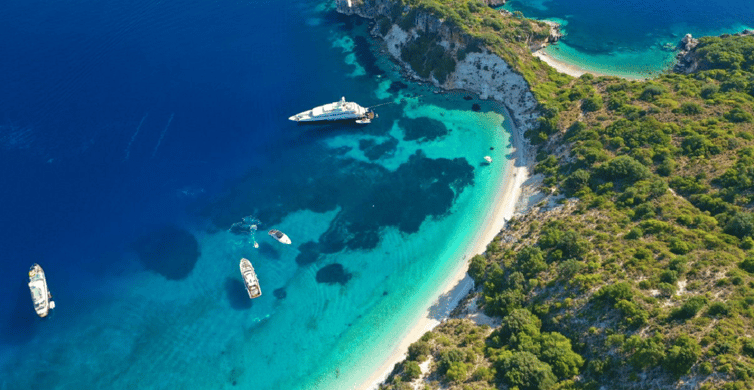
The beach in front of the village is a strip of sand and fine shingle beside the harbour, handy for a swim before lunch. The real draw is Mounda beach, which curves along the east side of the bay: a long stretch of sand with shallow, usually calm water that suits children, few facilities and a lot of empty space. The bay lies within a marine Natura 2000 area, protected among other things for its meadows of Posidonia seagrass, which shelter marine life and help keep the water clear.
Further east, towards Skala, Kaminia is another long sandy beach, also used by nesting turtles. Bring shade and water to both, as facilities are limited. For other beaches on the south coast, from Lourdas to Skala, see our beaches guide.
Turtle nesting at Mounda
Mounda is the main nesting beach for loggerhead turtles (Caretta caretta) on Kefalonia, and nests here have been monitored and protected since the late 1980s. The local Katelios Group, founded in the 1990s mainly by local people, has run nest patrols, information desks and an environmental centre in the village, and the conservation group Wildlife Sense, whose Skala field station covers the area, mapped large parts of the Mounda sea floor in 2026.
Females come ashore at night from about late May to mid-August to dig their nests. The eggs incubate for 45 to 60 days, so hatchlings emerge from about July to October, usually at night, and head for the brightest horizon, which should be the moonlit sea.
How to behave on a nesting beach
Nests are marked with signs and often protected with cages: keep out of them and never move the markers. Walk along the wet sand near the water rather than at the back of the beach, where most nests are laid, and do not dig holes or push umbrellas deep into the sand there.
Before you leave, knock down sandcastles and fill in holes, which can trap hatchlings. Stay off the beach at night in the nesting season unless you are with a conservation team, never use torches or phone lights on the sand, and keep the blinds closed if your room faces the sea. If you meet a turtle in the water, keep your distance and do not touch, feed or follow it. Our turtle guide covers the turtles in Argostoli harbour too.
Markopoulo and its August snakes
Up the hill, the village of Markopoulo is known across Greece for its snakes of the Virgin. In the days before the feast of the Dormition on 15 August, small, harmless snakes, a species known as the cat-eyed snake, appear in and around the church of the Panagia, and pilgrims see them as a blessing. The tradition is linked to a legend about nuns saved from pirates in 1705.
The village gets very busy and roads can be closed to traffic around the feast. If you go, dress respectfully, as for any church, and leave the snakes undisturbed.
Eating and staying in Katelios
Eating out in Katelios means fish. The harbour tavernas serve the day's catch, sold by weight, so ask the price before you order, along with Greek salads, grills and local wine. In July and August it is worth booking a table at weekends; outside the season choice is limited and most places close from late October to spring.
Katelios suits couples, nature lovers and families who want a calm beach and a slow pace, and who have a car. It is a poor choice without one: shops and nightlife are in Skala, and the headline sights are far away, with Myrtos well over an hour's drive and Fiskardo further still. Compare other bases in where to stay in Kefalonia.
Getting to Katelios and parking
Katelios is about 30 km from Argostoli and a similar distance from the airport, roughly 40–45 minutes by car on the south coast road through Lourdas or the inland route. Buses are few, so arrange a transfer for arrival and hire a car for your stay; see car hire in Kefalonia.
Parking is easy by the harbour and at the access points to Mounda, except at weekends in August. Poros, with its ferry to the mainland, is about 15 km north-east.